Dr. Tanushree Agrawal

Tanushree Agrawal

Assistant Professor of Psychology · Soka University

I study the relationship between aesthetics, complex emotions, and prosocial behavior across ages and cultures.

I am fascinated by how much of human behavior is motivated by aesthetic beauty, be it formal art forms (like music and art) or everyday experiences with beauty (like with nature, food, and fashion). I believe that aesthetic engagement can uniquely elicit self-transcendent emotions like being moved, awe, and compassion, which foster deep social connection and contribute to life's meaningfulness.

I have a PhD in Psychology from UC San Diego, a masters in music from Oxford University, and bachelors degrees in Cognitive Science and Economics from the University of Pennsylvania. (Fun fact: I also worked in finance for seven years!)


Aesthetics & Social Cognition Lab

Projects

Abstract painting representing aesthetic appreciation research

Aesthetic Engagement Conveys Important Social Information

Many activities are pursued for their own sake — motivated by beauty or enjoyment rather than a functional goal. I study what inferences we make about others who engage aesthetically, finding that aesthetic motivation signals emotional capacity and prosocial tendencies. When someone chooses to spend resources on an activity purely for its beauty, observers infer that they are more emotionally nuanced and more likely to behave prosocially. This work has been funded by the CARTA Institute.

Selected Publications

  • Agrawal, T. & Schachner, A. Aesthetic motivation impacts judgments of others' prosociality, emotionality, and mental life. Open Mind: Discoveries in Cognitive Science. (2023)
  • Agrawal, T. & Schachner, A. Aesthetic appreciation impacts judgments of others' prosociality by signaling their heightened emotionality. International Conference on Beauty and Change. (2023, November)
  • Agrawal, T., & Schachner, A. People think of others as more prosocial when they are motivated by aesthetic goals vs. instrumental goals. Proceedings of the Annual Meeting of the Cognitive Science Society, 44. (2022)
Self-transcendent emotions research

Aesthetics and Self-Transcendent Emotions

Life's most meaningful moments involve complex, heartwarming, social emotions like being moved, awe, and tenderness. Surprisingly, abstract art forms like art and music can also profoundly move us. I explore what role such self-transcendent emotions play in the link between aesthetic engagement and prosociality.

Selected Publications

  • Agrawal, T., & Bruns, A.* Feeling moved mediates the enjoyment of emotional art and music. Emotion. (under review) *co-first author
  • Agrawal, T., Vuoskoski, J., & Clarke, E. Being moved by music: What does it feel like and is it inherently prosocial? Talk given at the Meeting of the Society for the Psychology of Aesthetics, Creativity, & the Arts (APA Div 10), Omaha, NE. (2026, March)
  • Agrawal, T., et al. Time-of-day practices echo circadian physiological arousal: An enculturated-embodied practice in Hindustani classical music. Musicae Scientiae. (2021)
Music and prosocial behavior research

Real-World Applications Using Music to Improve Social Behavior

Music is a particularly salient domain due to its ubiquity in interpersonal settings. In published work funded by the Grammy Foundation, I show that observing others' musicality impacts moral judgments. People judge musical entities (humans and animals) as more wrong to harm, because musicality signals a richer emotional and mental life. I am now testing whether this can be leveraged to address real-world problems: reducing dehumanization and prejudice toward marginalized groups (e.g. people in prison), and improving moral attitudes toward animals and nature.

Selected Publications

  • Agrawal, T., Rottman, J., & Schachner, A. How musicality changes moral consideration: People judge musical entities as more wrong to harm. Psychology of Music, 51(2), 371–387. (2023)
  • Agrawal, T., & Schachner, A. Music Behind Bars: Learning About the Musicality of a Person Experiencing Incarceration Reduces Negative Social Attitudes Towards Them. Talk given at the biennial meeting of the Society for Music Perception and Cognition, Banff, Canada. (2024, July)
  • Agrawal, T. & Schachner, A. Musicality changes moral consideration of animals: People judge musical animals as more wrong to harm. Budapest CEU Conference on Cognitive Development. (2024, January)
Auditory perception research

Cross-Modal Auditory Perception

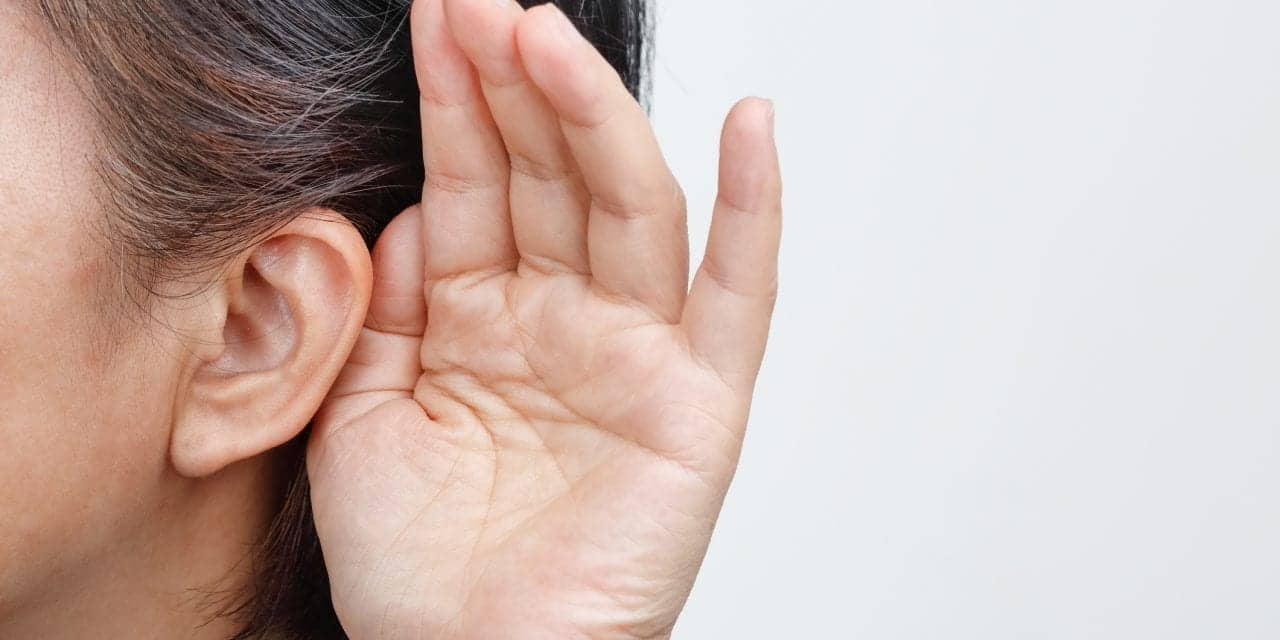
How do humans extract nuanced meaning from everyday sounds? We study ecological approaches to auditory perception, including how people can determine properties like water temperature simply by listening. Our developmental work examines how these perceptual abilities emerge across childhood.

Selected Publications

  • Agrawal, T. & Schachner, A. Hearing water temperature: Characterizing the development of nuanced perception of sound sources. Developmental Science, 26(3), e13321. (2023)
  • Agrawal, T., Lee, M., Calcetas, A., Clarke, D., Lin, N., & Schachner, A. Hearing water temperature: Characterizing the development of nuanced perception of auditory events. In S. Denison, M. Mack, Y. Xu, B. Armstrong (Eds.), Proceedings of the 42nd Annual Conference of the Cognitive Science Society, 42, 494–499. (2020)

View full list on Google Scholar →

Team

Miyuki Sase

Miyuki Sase

Research Assistant

I am an undergraduate liberal arts student concentrating in Social and Behavioral Science at Soka University of America. I have taken multiple psychology courses, which have allowed me to deepen my interest in the complexity of the human mind - and I aspire to be a psychologist now. Specifically, I am interested in how early different educational styles affect children's long-term well-being. In my free time, I love walking around campus and reading Japanese literature.

Vanessa Camuso De Souza

Vanessa Camuso De Souza

Research Assistant

Hi! I am an undergraduate student concentrating in Social and Behavioral Sciences at Soka University of America. I am passionate about children's development and hope to pursue a career in developmental psychology to better understand how children grow and the factors that influence their behaviors. In my free time, I enjoy staying active, playing sports, and going to the beach!

Tien Dong

Tien Dong

Research Assistant

Hi! I'm a psychology undergraduate at Soka University of America. I am interested in the intersection of psychology and education, particularly how insights from educational psychology can enhance curriculum design. Apart from school, I enjoy watching anime, playing taiko, and traveling to new places.

Kamoho Chan

Kamoho Chan

Research Assistant

My name is Kamoho Chan and I am a Native Hawaiian undergraduate at Soka University of America studying Social Science, specifically psychology and political science. I take pride in my native tongue, diverse views, and family. I am interested in family law and child developmental psychology. My favorite food is sushi and in my free time I love to play volleyball and make ceramics with some friends.

Join the Lab

I welcome undergraduate students who want to gain research experience. Research assistants help with all phases of the research, and I work with you to tailor the experience to your educational goals. To apply, please email me with your CV or resume, a brief statement of your research interests, and your availability (hours per week, semesters).

Teaching

I am passionate about working with students to show them that psychology is ultimately the study of their own wonderfully complex minds and experiences.

Courses at Soka University

More Materials

I had a lot of help from other professors when making these syllabi, and would love to pay it forward! Please email me if you would like to see more details like readings, slides, quizzes, etc.